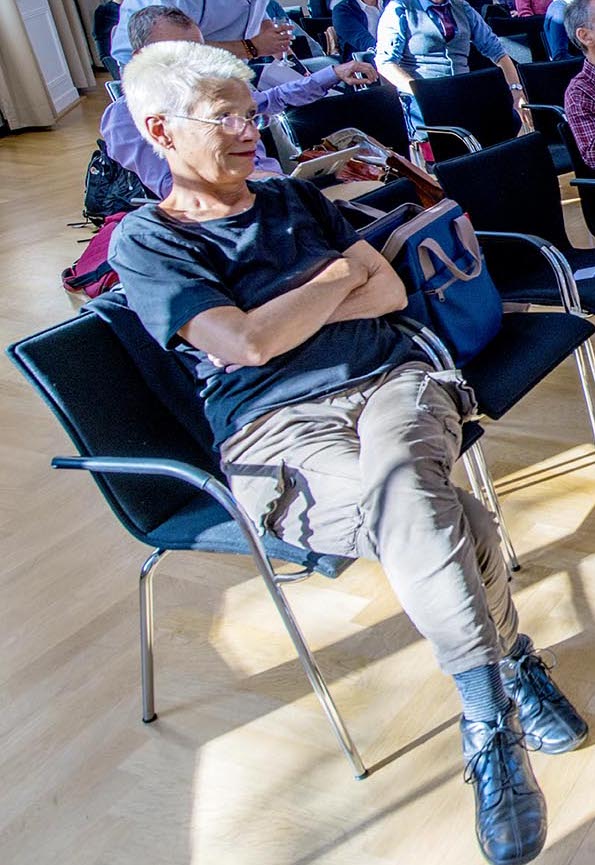
I research across the two disciplines of philosophy and psychoanalysis, together with other contributors to the Interdisciplinary Psychoanalytic Thought (IPT) network.
Biography
Originally a psychiatrist, I gained a PhD in philosophy from the University of Reading in 2000. Between 2006 and 2017 I taught philosophy as a Bye-Fellow in Girton College at the University of Cambridge, where I attended the long-standing psychoanalysis reading group convened by John Forrester and Mary Jacobus and occasionally lectured on philosophy of mind and psychoanalysis. As a former associate member of the Philosophy Faculty at the University of Oxford, I also taught and lectured on the philosophy of social science. From 2011 to 2020 I was the Director of Research for the Independent Social Research Foundation, which further oriented my research towards the social sciences. My current work, with the IPT group, is on how social and psychical structures of thought and feeling interact and ‘talk to’ one another in a meaningful way. The principal outlet for this work is the Interdisciplinary Psychoanalysis Seminar in the St John’s College Research Centre in Oxford, which I have co-convened with Paul Tod since 2005.
IPT Network
Begun during the pandemic in 2020, the IPT network brings together scholars from the academic and mental health professional sectors to understand better the relevance of psychoanalytic thought to society and culture. Engaging principally with the British clinical tradition of object relations theory, its aim is to pursue a critical interrogation of the relation between psychoanalysis and the social sciences, humanities and arts. It brings the different disciplines together with psychoanalysis by applying both analytic and critical methodologies to interdisciplinary understanding. It maps out conceptions of social meaning as these intersect with concepts and theses from psychoanalysis, under the broad rubric of cultural transmission.
Philosophy, as the core discipline of the network, draws on historical, analytic and more broadly European approaches to clarify and critique concepts relevant to understanding mechanisms of transmission: identification, ‘empathy’ and sympathy in the social sciences; and modes of individual and collective imagination. This work relies on developing a philosophical understanding of clinical psychoanalytic observation, in particular the psychoanalytic countertransference.
The network receives support from the Independent Social Research Foundation. Contributors come from across the disciplines and may also be psychodynamic or psychoanalytic clinicians. Meetings mainly take place over Zoom, which enables attendance from beyond the UK. Workshops with both in-person and online attendance are held in the UK and the recordings of some of these may be viewed on application, by clinicians and academic staff and students.
Events currently publicised on the Wollheim Centenary website: a series of workshops in February, March and July will take place in 2026 under the title ‘After Wollheim’, the third phase of the IPT’s Richard Wollheim Centenary project. For further information about this, or any aspect of the IPT research network, please visit the Wollheim Centenary website or get in touch using the ‘Contact’ form on this website.
 Louise Braddock